Why subscribe?
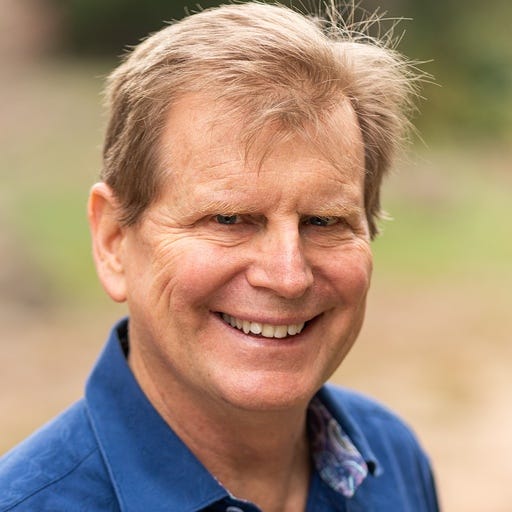
I’ve watched this movie before. I started working around artificial intelligence in the 1980s, at Symbolics (MIT AI lab spinoff) and later at MCC Research in Austin, back when “AI” meant Lisp machines, expert systems, and the promise that real reasoning machines were a few years off.
Then the field went quiet for most of a decade. I’ve watched the same pitch resurface since, dressed in new clothes each time: the machine is about to do your thinking for you. The internet made that promise. Mobile made it. Now large language models are making it again.
That’s the vantage point AI for Lifelong Learners writes from. AI isn’t only the chatbot you open on purpose anymore. It’s in search, in your kid’s classroom, in the hiring software standing between you and a job, in the box your doctor checks before she looks up from the screen. It’s becoming the environment, and most of that shift is happening before anyone decides what role it should play.
I don’t think the interesting question is whether AI is good or bad. It’s whether you can still tell what a given system is doing, whose purposes it serves, and whether you’re using it or it’s using you. That’s judgment, and judgment is a muscle. It weakens exactly where you stop using it.
So I write about the places AI actually touches a life: learning, work, memory, attention, the people you love, the decisions you used to make without asking anyone’s permission. Some pieces start with a new tool. More of them start somewhere else: a book, an old argument I’m still turning over, a fight in a Facebook group, something that happened at my kitchen table.
My daughter, Lily Chambers, writes the Reading Room. She grew up inside the technologies I spent a career watching arrive. Reading the two of us side by side is part of the point.
One thing shapes how I read all of this, and it comes from a friend, Dan Epp, and what he calls the Relational Paradigm: before you pick a side, look at what’s actually happening between the two things you’ve been told to choose between. It shows up here less as a theory and more as a habit: distrust the forced choice, look for the third thing.
This isn’t a publication for keeping up with every model release. Keeping up isn’t the same as staying capable. What I’m after is durable: the ability to notice, question, compare, test, and choose, on the specific tool in front of you is obsolete.
Subscribe and join the conversation.
Be what the machines cannot be. Be more you. Be more human.
Start here: What it means to be human in 2026 and beyond